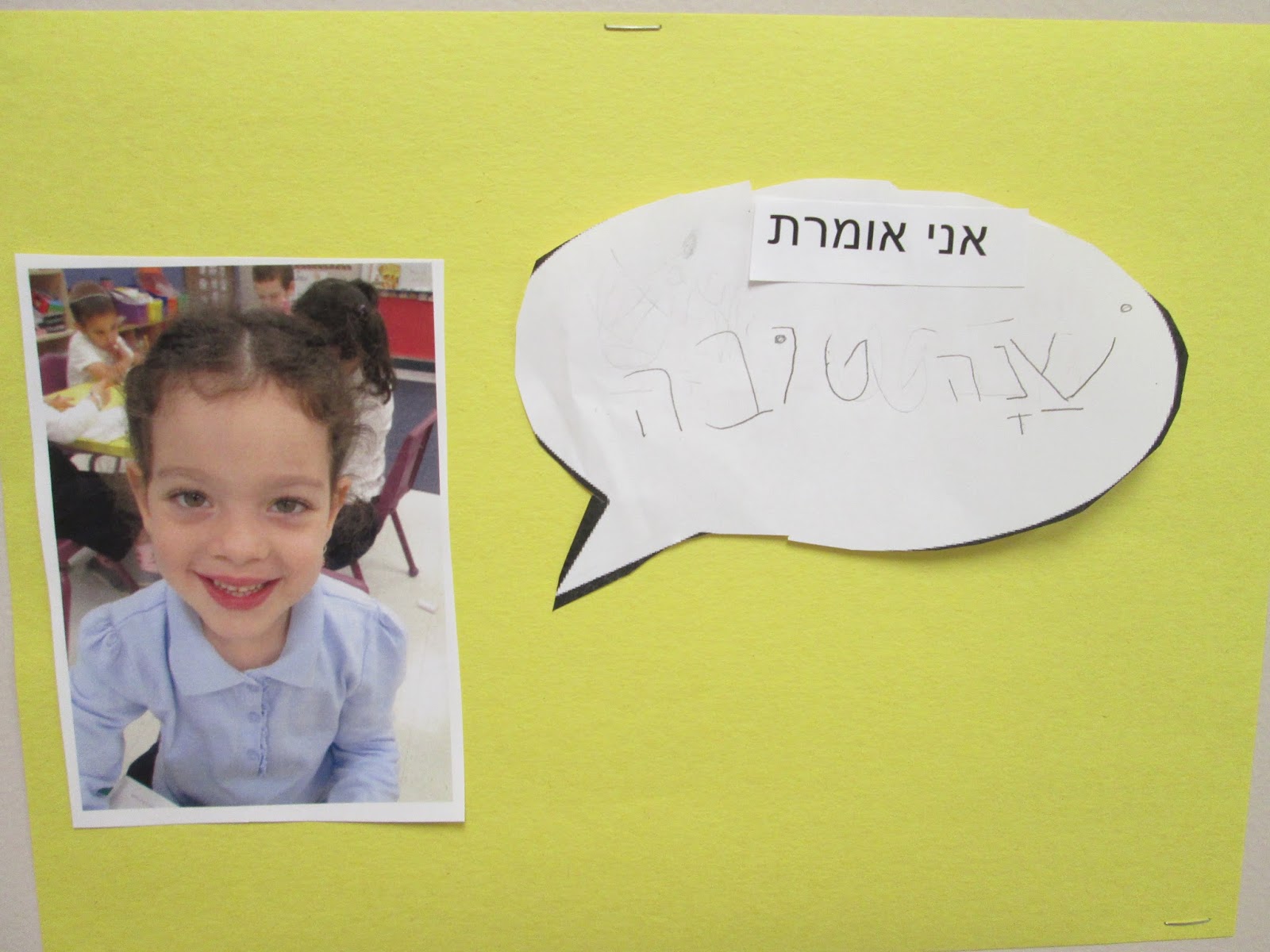
Today we spoke in Hebrew using the verb omer/omeret (says). We put together sentences for our new Hebrew "Words with Friends" wall. Throughout the year we will write more sentences using the Hebrew vocabulary we learn in class. I am so proud of all these Hebrew speakers!
Thursday, September 29, 2016
Wednesday, September 28, 2016
Tuesday, September 27, 2016
Dear Parents
What a busy day we had! We learned the verb Omer/Omeret (says m/f) and began coming up with sentences using this new verb. For example: Morah Shaina Omeret Shalom (Morah Shaina says hello).
We worked on rhyming with tzeirei sounds. We completed an apple themed worksheet to reinforce this skill.
What a busy day we had! We learned the verb Omer/Omeret (says m/f) and began coming up with sentences using this new verb. For example: Morah Shaina Omeret Shalom (Morah Shaina says hello).
We worked on rhyming with tzeirei sounds. We completed an apple themed worksheet to reinforce this skill.
Reading books and a reading links activity.
letters and vowels on bottle caps to complete Hebrew vocabulary words
Alef Bet matching and a new Hebrew hang-man game.
Monday, September 26, 2016
Thursday, September 22, 2016
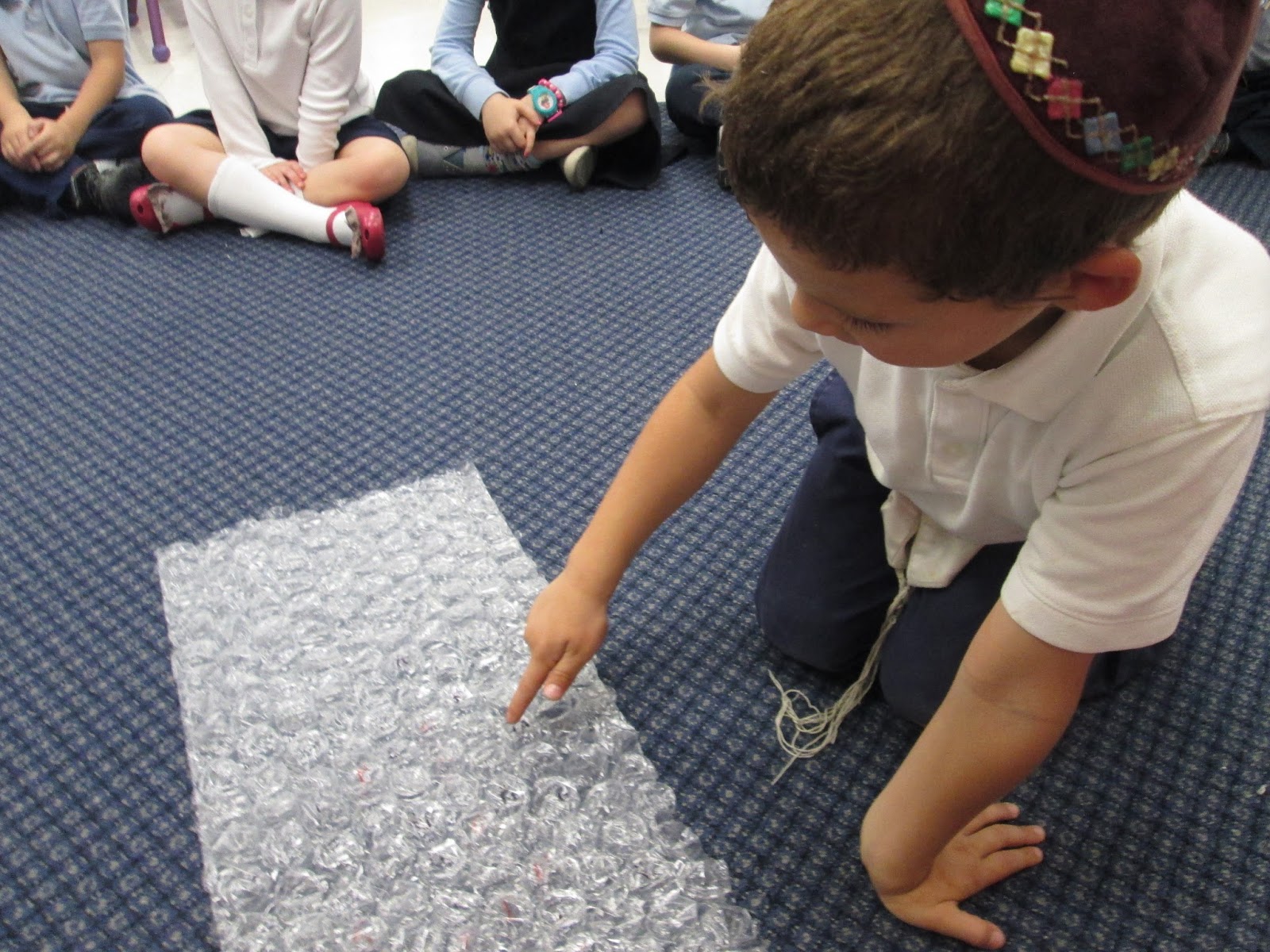
Today we practiced more with tzeirei. Some of us got to pop a tzeirei sound on bubble wrap. If you have any extra around the house, it is a great way to have your children practice reading. Simply write a word or sound on a bubble and once they read it, they can pop it!
Bentzi joined us and taught us the words Hu (he) and Hee (She). We categorized the children in our class under he/she columns. We also rolled a big dice with images of family members and kept a tally under the he/she columns.
Now that we've all had a turn playing the Alef-Bet matching game on the computer, we can move on to more advanced reading games. Your children can access these games at home by clicking here
or by following this link
http://www.gamba1.cet.ac.il/Student/StudentSubjectsMenu.aspx
Wednesday, September 21, 2016
Today we played a "tzeirei tzedaka" game as a group that gave each of us a chance to practice reading this new vowel. We also had a secret tzeirei message to reveal. You can send these secret messages to your children by writing with white crayon on white paper, then have them cover the entire area with a dark marker. Ta-Da- the secret message will appear!
More Rosh Hashana themed play dough
Rosh Hashanah vocabulary word match
Tuesday, September 20, 2016
Today Bentzi introduced Rosh Hashanah Hebrew vocabulary to use with the conversational skills we already know. We also learned the word "L'Chvod" (In honor of) to enhance the special meaning connected to these objects. For example: "Tapuach L'Chvod Rosh Hashanah". Bentzi also taught us that "Hu" means' he'...but more on that later in the week.
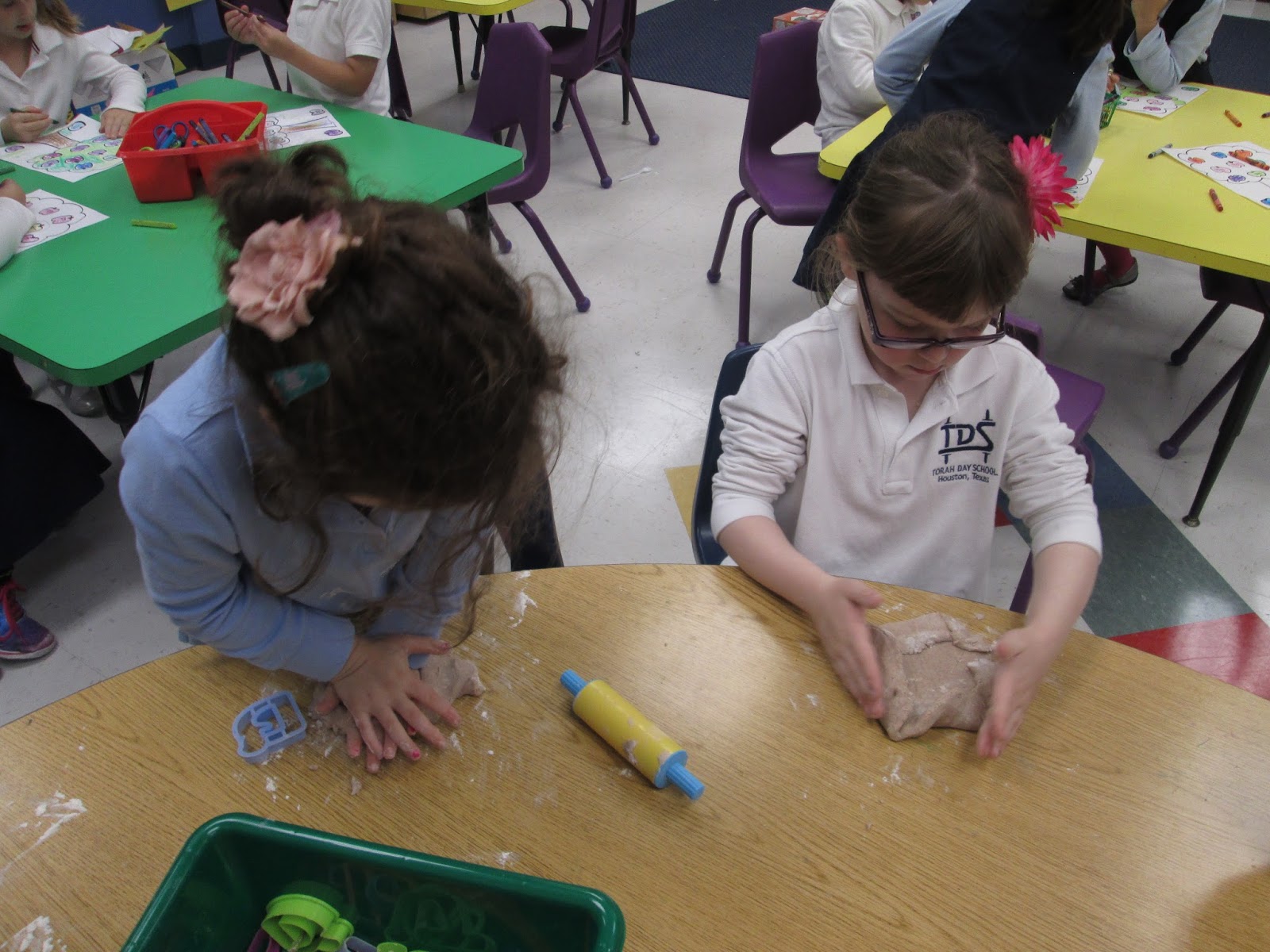
In order to strengthen the Rosh Hashanah vocabulary words, Morah Shaina brought in apple and cinnamon scented play-dough. This multi-sensory activity is a wonderful way to reinforce new concepts for all of our students . If a student learns something using more than one sense, the information is more likely to stay with him or her.
But multi-sensory learning can be particularly helpful for kids with learning and attention issues. For example, these kids may have trouble with visual or auditory processing. That can make it hard for them to learn information through only reading or listening.
Using multiple senses gives these (and other) kids more ways to connect with what they’re learning. This type of hands-on learning can make it easier for students to collect information and make connections between new information and what they already know.
We are learning that the foods we eat on Rosh Hashanah represent something meaningful about the upcoming year.
| No matter how I put it on the board, the Tapuach (incredibly!) continued to dip itself in the D'vash. |
In order to strengthen the Rosh Hashanah vocabulary words, Morah Shaina brought in apple and cinnamon scented play-dough. This multi-sensory activity is a wonderful way to reinforce new concepts for all of our students . If a student learns something using more than one sense, the information is more likely to stay with him or her.
But multi-sensory learning can be particularly helpful for kids with learning and attention issues. For example, these kids may have trouble with visual or auditory processing. That can make it hard for them to learn information through only reading or listening.
| Round Challah |
Using multiple senses gives these (and other) kids more ways to connect with what they’re learning. This type of hands-on learning can make it easier for students to collect information and make connections between new information and what they already know.
| Hebrew spelling with Alef Bet cookie cutters |
Letter and number Rosh Hashanah activity.
Subscribe to:
Posts (Atom)